
✳︎ A LITTLE GUIDE TO BIG FEELINGS
Small steps toward
calmer moments.
There is no perfect way to feel better. With Wobly, start with curiosity: what does your child enjoy, what feels uncomfortable, and what might help when a moment becomes difficult?
✳︎ STEP 01 / Ease into it
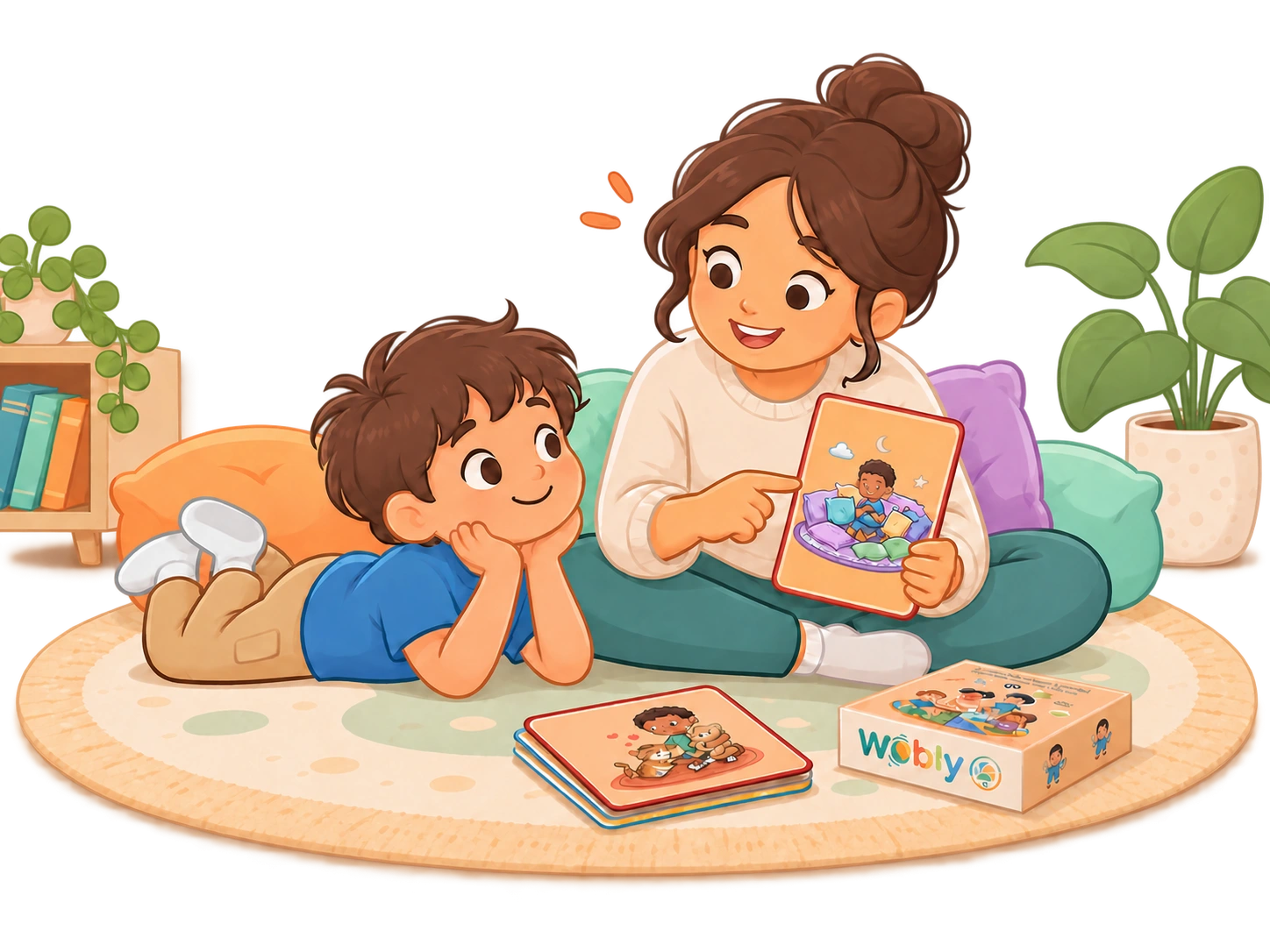
Begin during a calm moment
Introduce some activities when your child is relaxed and available to engage.
You might say:
Look, I’ve got some cards that might help when you’re having big feelings. We can have a look at them together and see what feels right for you.
Show the illustration, read the short instruction and demonstrate if helpful.
Keep the first exploration brief and enjoyable, without pressure to perform or become calm. Stop while it still feels comfortable, rather than working through the whole deck.
Let curiosity lead the way.
1
✳︎ STEP 02 / Keep it simple
Build a small personal selection
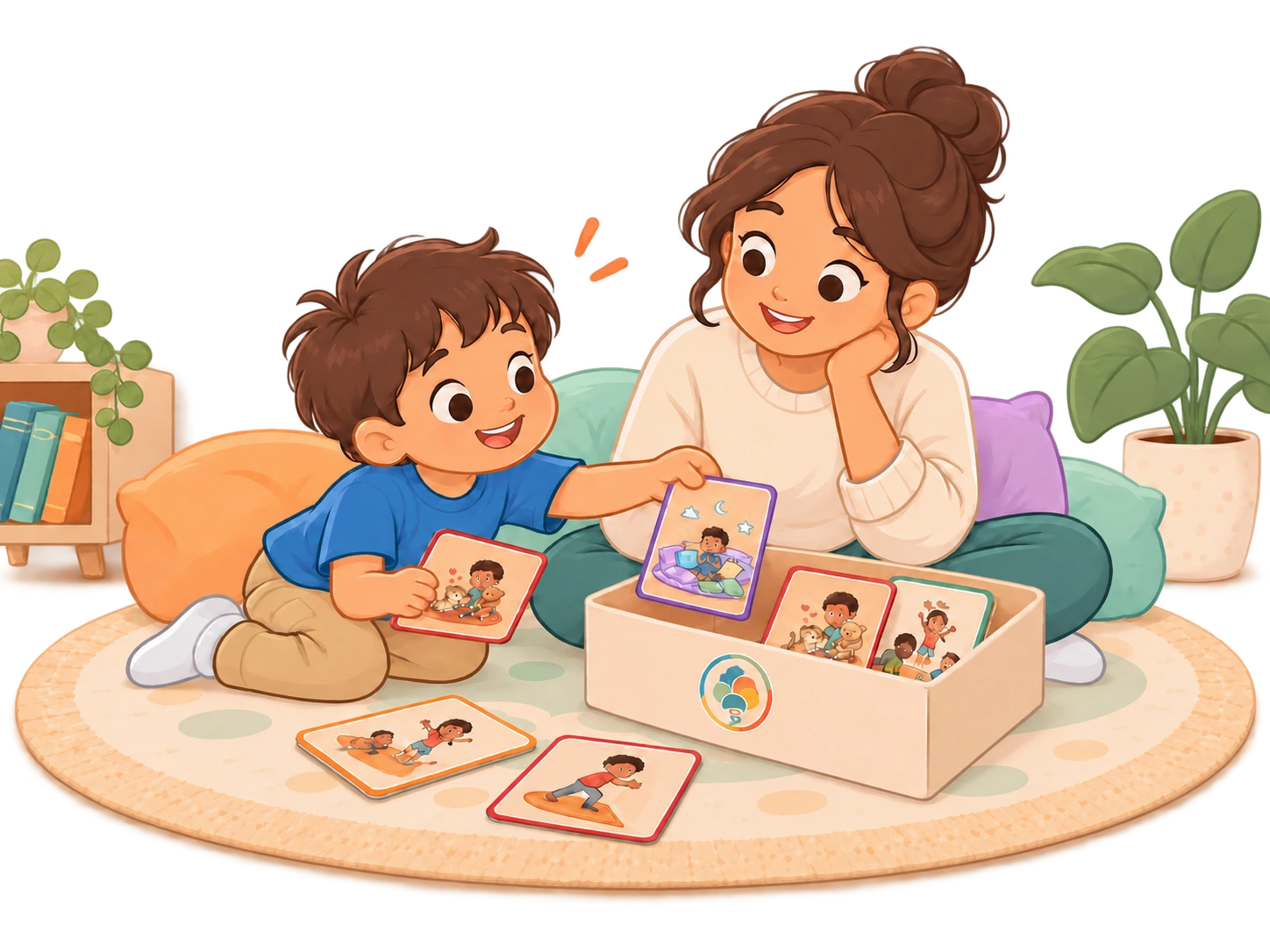
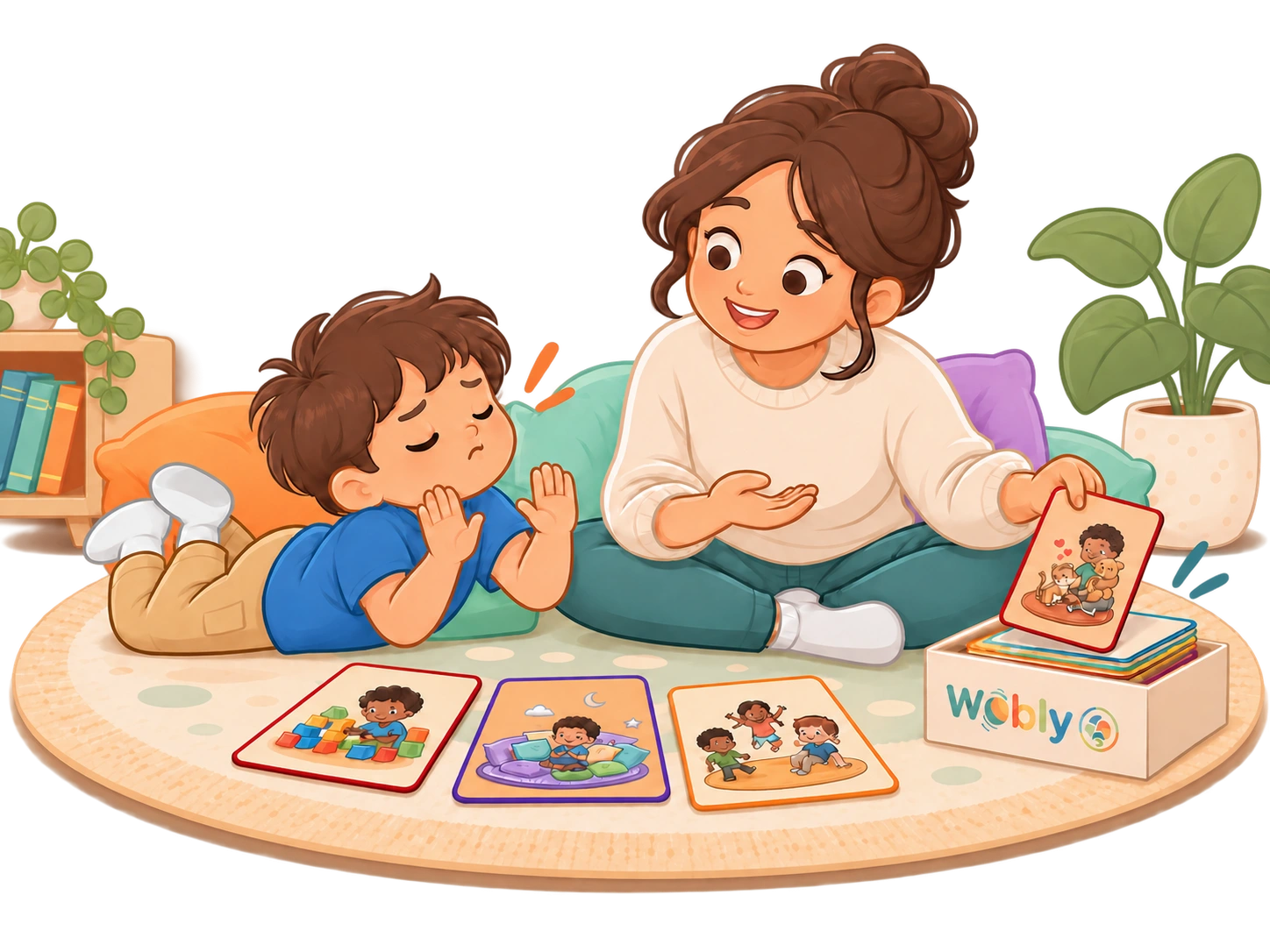
Gradually choose up to five preferred cards to keep in a dedicated “calm box” or accessible place. During a difficult moment, you may invite the child to use them.
A selection could include a movement activity, an expression activity and a way to seek comfort—but there is no need to include every category. Your child’s preferences matter more than creating a balanced collection.
Review the selection occasionally. A familiar favourite may remain useful, while another activity may no longer appeal.
A few favourites feel more manageable
2
✳︎ STEP 03 / Connect first
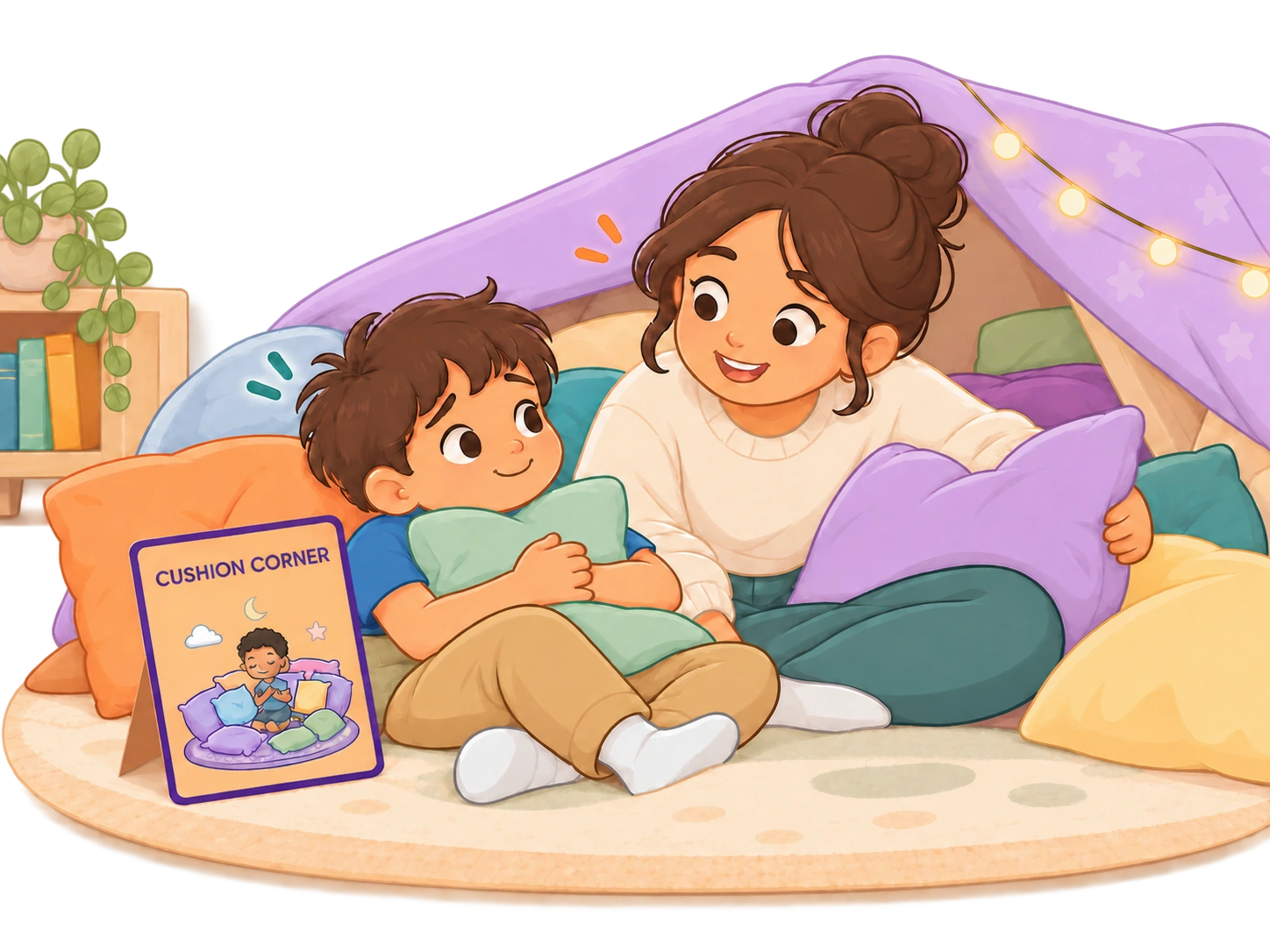
Offer co-regulation and support
Your support is the anchor. The type of support needed changes as children grow and develop, but relationships remain important across ages. Guidance on co-regulation
Acknowledge feelings warmly without assuming you know exactly how your child feels:
You seem uncomfortable. Would you like some help?
That was disappointing. We can take a moment.
Use a short invitation, allow time for a response and demonstrate if requested. Keep demands low during tough moments.
You do not need to be perfectly calm. If you feel overwhelmed too, take a moment when you can, use fewer words, or ask another trusted adult for support.
Follow your child’s cues : join in, stay nearby, or give them space.
Co-regulation is about connection, not perfection.
3
✳︎ STEP 04 / Every moment is different
Choose the right time
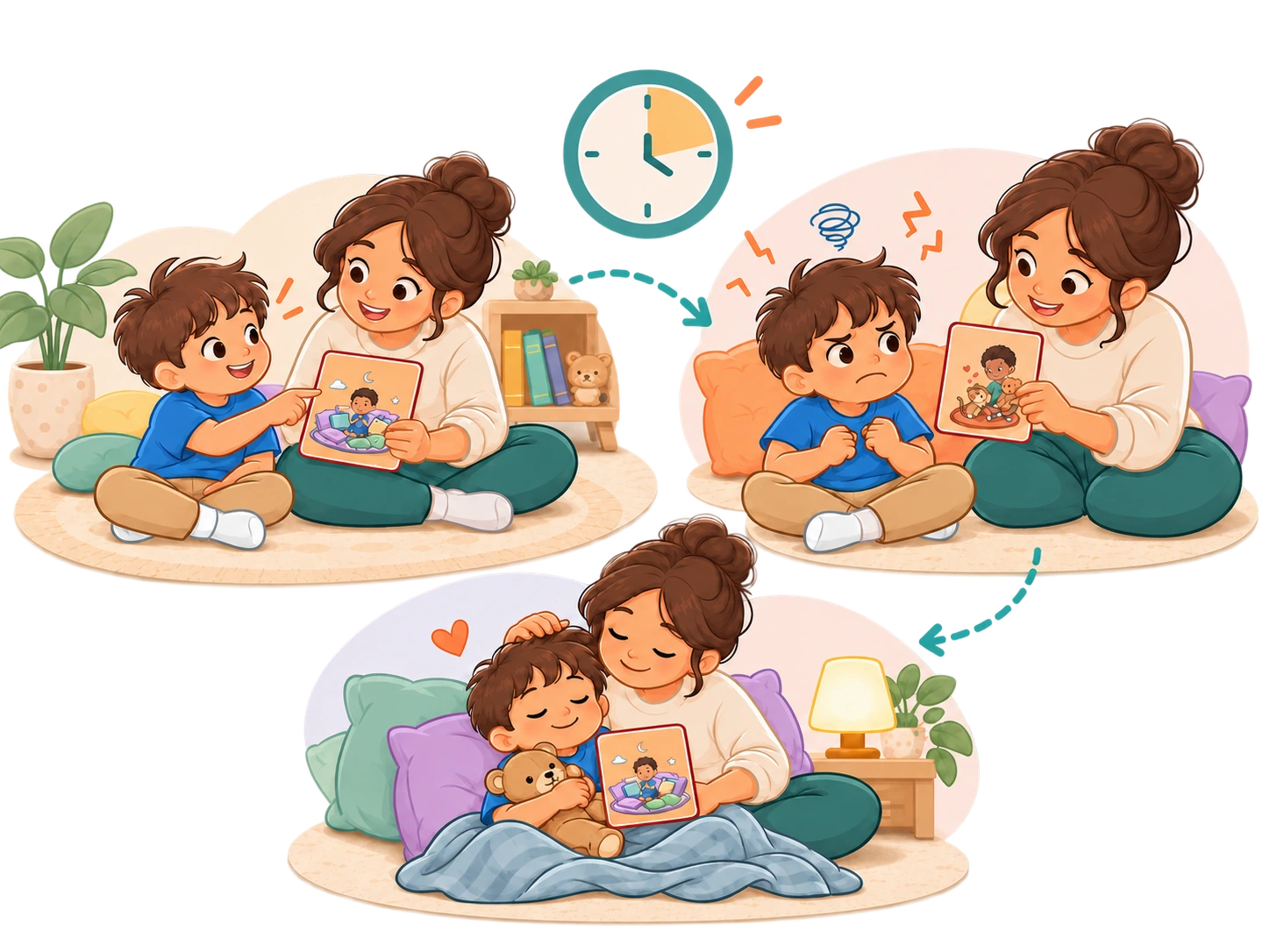
The cards can be explored at three different times:
- During calm moments: discover activities and make them familiar.
- At the first signs of tension: gently offer a preferred option.
- After an overwhelming moment: offer comfort or reflection when your child is ready.
During intense distress, prioritise safety, fewer demands and supportive presence. Avoid presenting a full selection or asking your child to explain what happened.
An activity is always optional. Your child may refuse or stop at any time. Cards should never be used as punishment, restraint or a condition for receiving comfort.
Before, during early signs, or after
4
✳︎ STEP 05 / Gentle reflection
Learn from the experience without testing
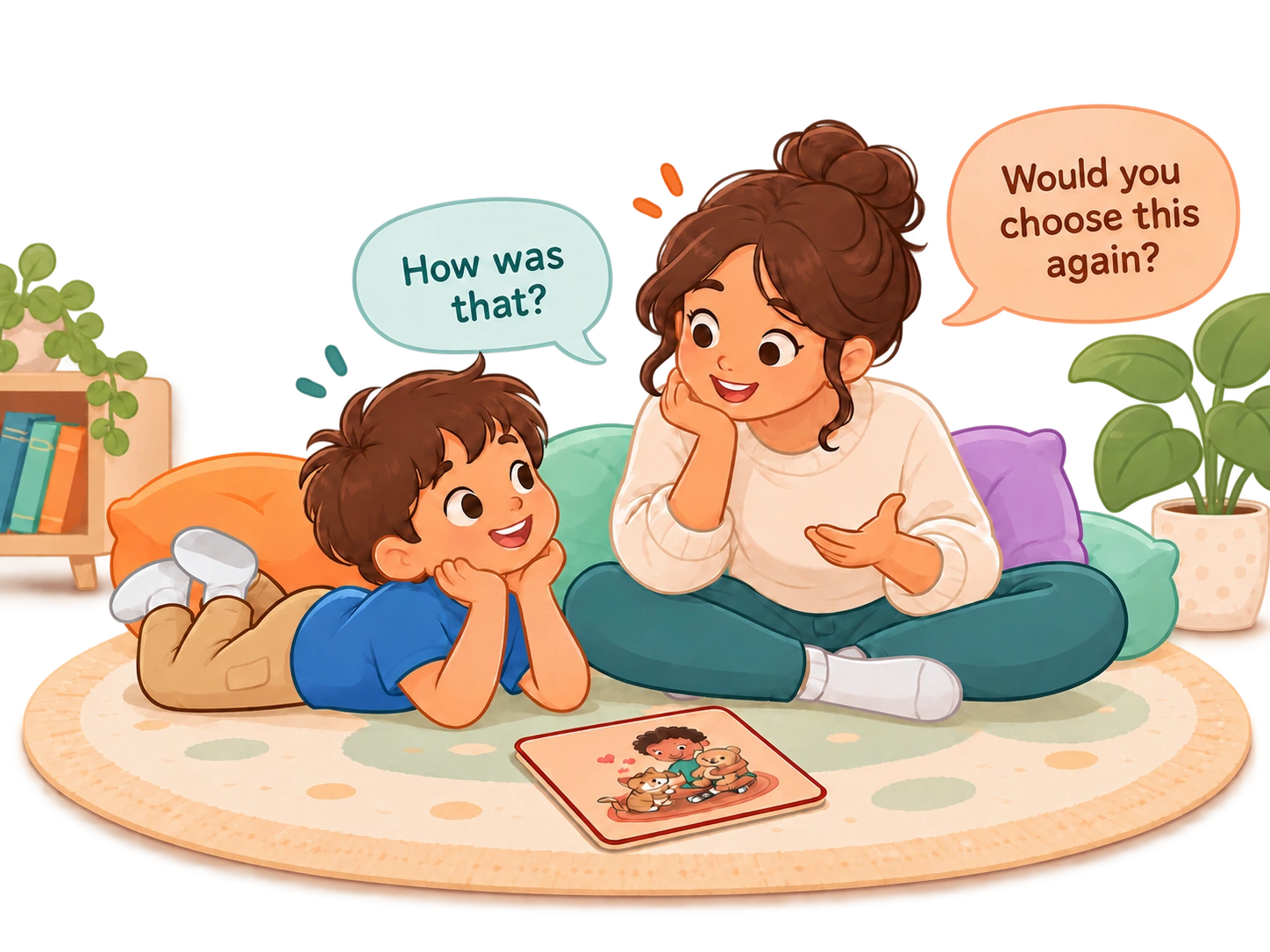
Once calm, invite reflection with gentle questions :
How was that for you?
Would you choose it again?
Did you want more space or more company?
Avoid turning it into a test.
They can respond through words, gestures or pointing. A clear I didn’t like it
is useful information.
Recognising a need, refusing an uncomfortable activity or asking for support are all meaningful contributions to this shared learning.
There are no right or wrong answers.
5
✳︎ STEP 06 / Their choice matters
Adapt and respect boundaries
Adapt physical activities to the child’s abilities and use suitable materials in a safe space. Touch, hugs and blanket activities require the child’s agreement; they must remain able to move freely, breathe comfortably and stop immediately. Follow any relevant professional advice about their individual needs.
With your child involved, share preferred cards with other caregivers or school staff. Explain what they enjoy, what they dislike and how they prefer an activity to be offered. The choices may differ between home and school.
Activities are always optional. Respect refusals and set aside anything that feels uncomfortable. Check whether your child needs rest, food, support, fewer demands or a change in surroundings.
If distress is persistent, severe or interfering with home, school or relationships, seek guidance from an appropriate health professional. CDC guidance for families
Keep the cards accessible, the invitations gentle and your child’s experience at the centre.
6
THE WOBLY WAY
Every child. Every feeling.
At their own pace.
With understanding, support and freedom to choose, children can gradually build their own emotional toolkit — learning to recognise their feelings, notice early signs and discover what works for them.
Little by little, these small discoveries can help them navigate their emotions with growing confidence and independence.
There’s no perfect pace. Some days will be harder than others, and that doesn’t undo progress.