✳︎ For professionals
A shared tool for emotional regulation.
In a therapy room, a classroom, or an educational setting, supporting a child’s emotional regulation often begins with a question: What might this child be experiencing, what do they need, and how can we explore that together?
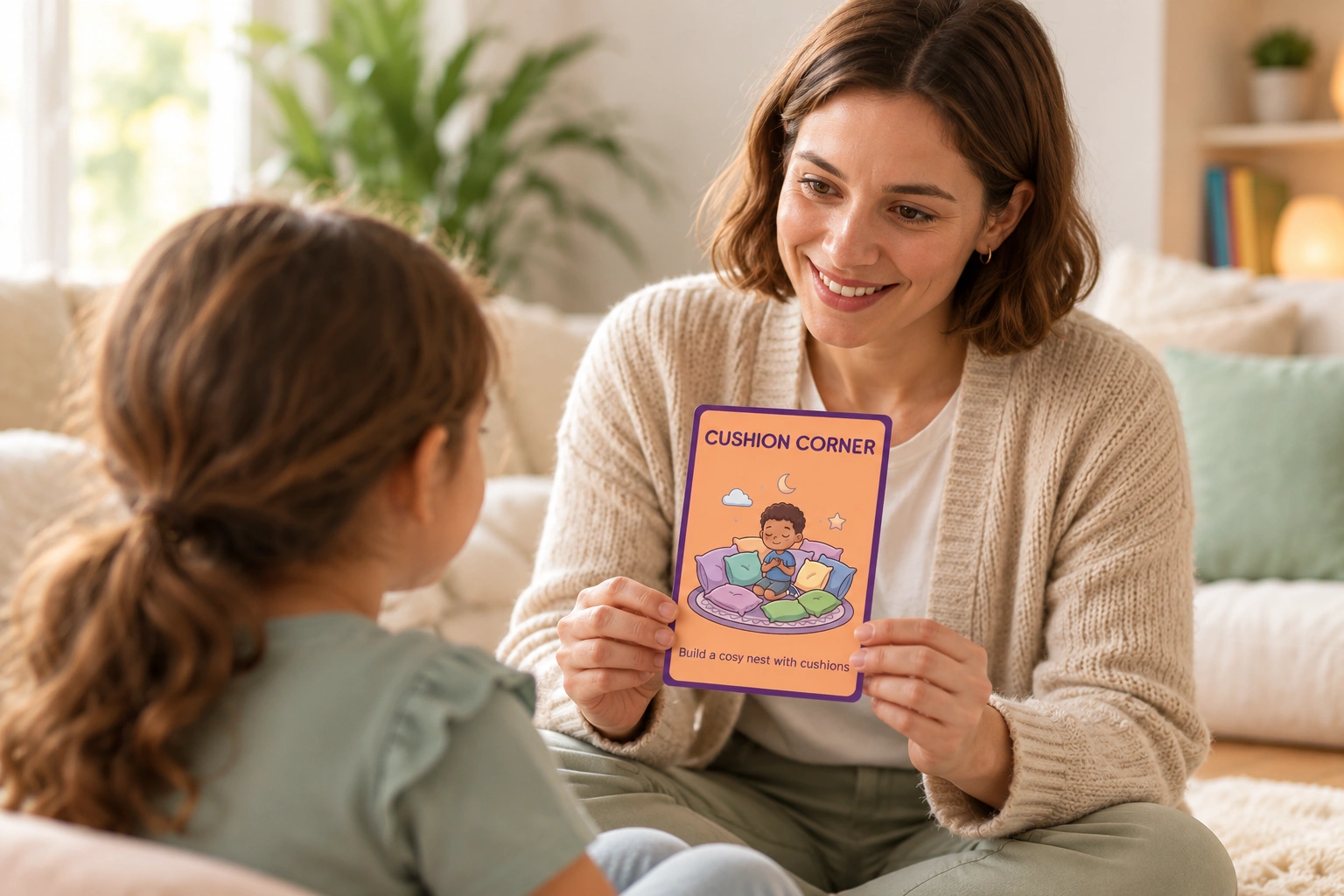
After 17 years working closely with children, teenagers, and their families, I created Wobly Emotional Regulation Cards to offer a practical, inclusive starting point for that conversation.
Designed for children aged 4–12, the cards can be used by psychologists, speech and language therapists, psychomotor therapists, occupational therapists, educators, and school staff. Their role is to support your professional judgement and the relationship you build with each child.
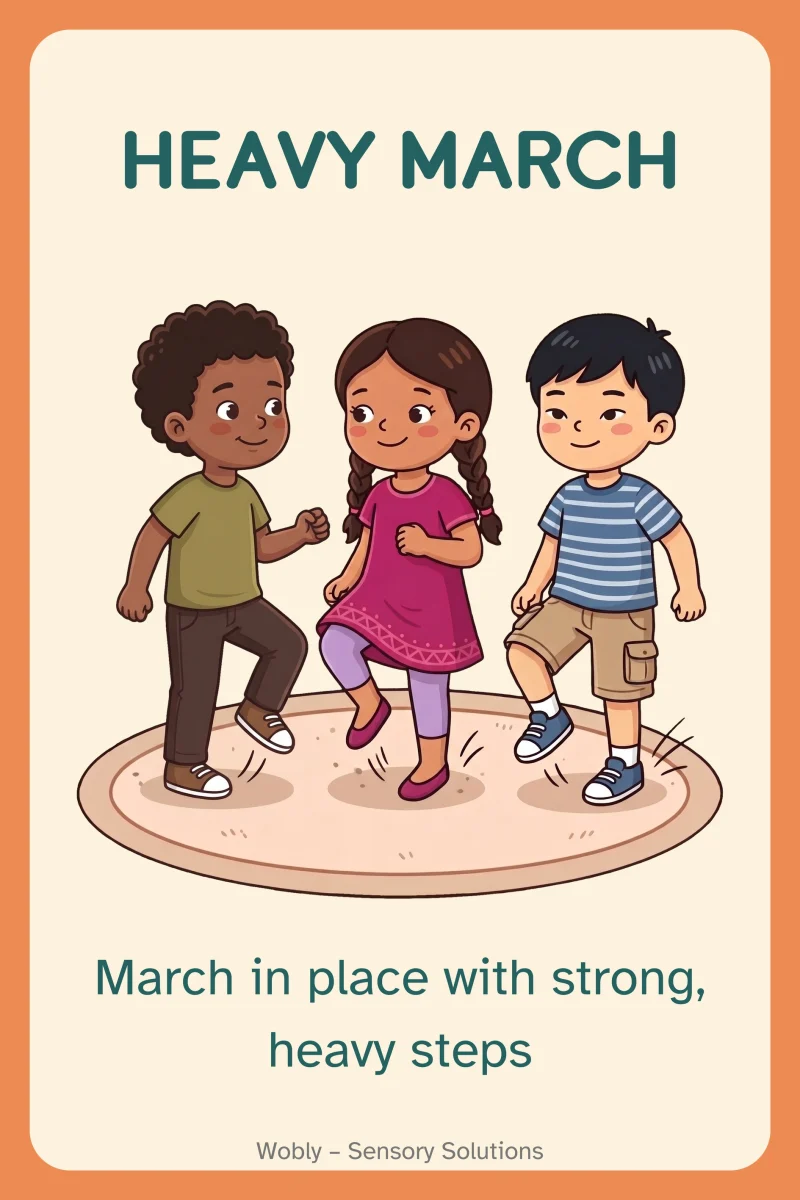
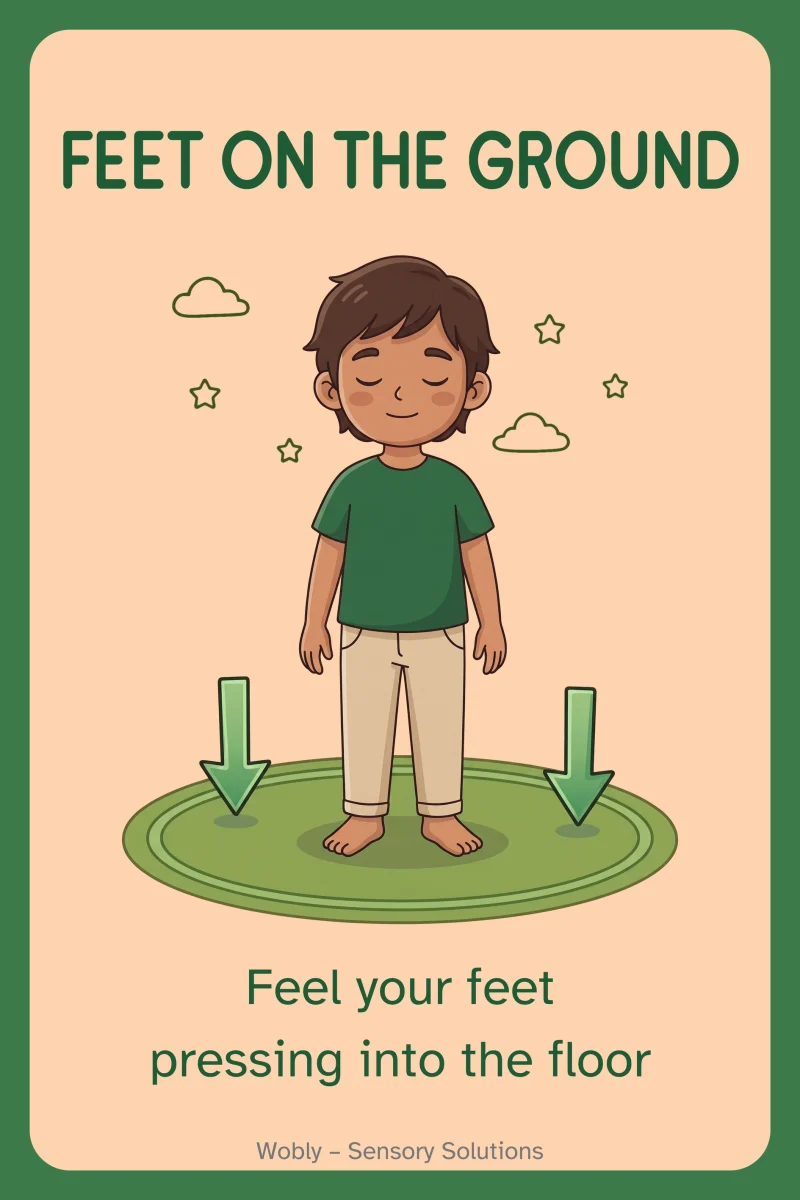
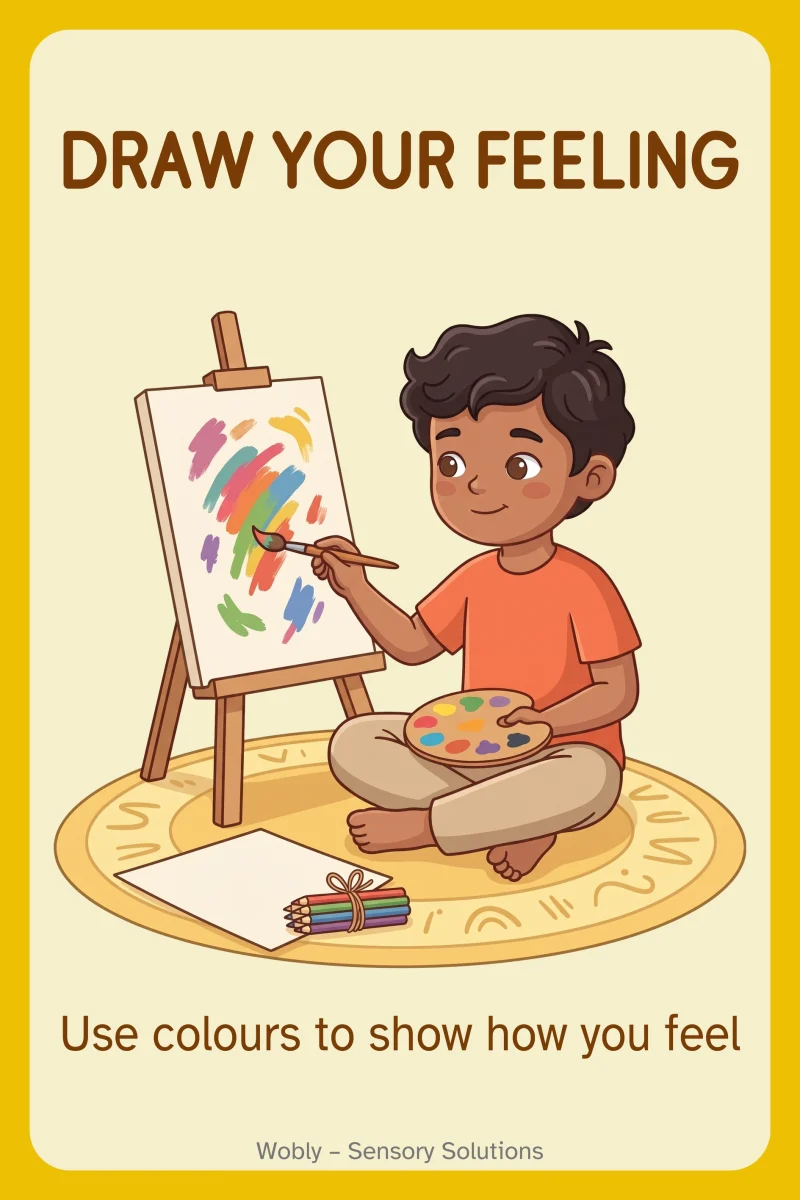
The uncluttered illustrations, consistent colour coding, accessible typography, and matte finish were chosen with different needs and sensitivities in mind.
You can introduce an activity through play, demonstration, conversation, or shared participation, adapting the language and expectations to the child’s communication, developmental abilities, and preferences.
Exploration comes before expectation.
During a calm moment, invite the child to try a small selection of activities. Observe their response and make room for their feedback: What feels comfortable? What would they choose again? Would they prefer support, movement, or space?
This process can open a conversation about bodily sensations, emotional experiences, and ways to express a need. A child’s refusal is useful information too.
A bridge between settings.
A few familiar cards can provide shared reference points across sessions, home, and school. With the child and family involved, professionals can agree on how to offer those strategies, while remaining attentive to the different demands of each environment.
The cards are designed as a flexible support for guided exploration. They do not replace assessment or an individual intervention plan.
For me, the value of a creative support lies not only in the activity it offers, but in the conversations and discoveries it can make possible.
My intention is to give professionals another way to explore emotional regulation alongside children, an accessible resource that keeps the child’s voice central—supporting self-understanding, choice, and participation within a trusting relationship.
— Séverine, Child Development Specialist & Founder of Wobly